

Echinacea Purpurea
Echinacea Purpurea
Couldn't load pickup availability
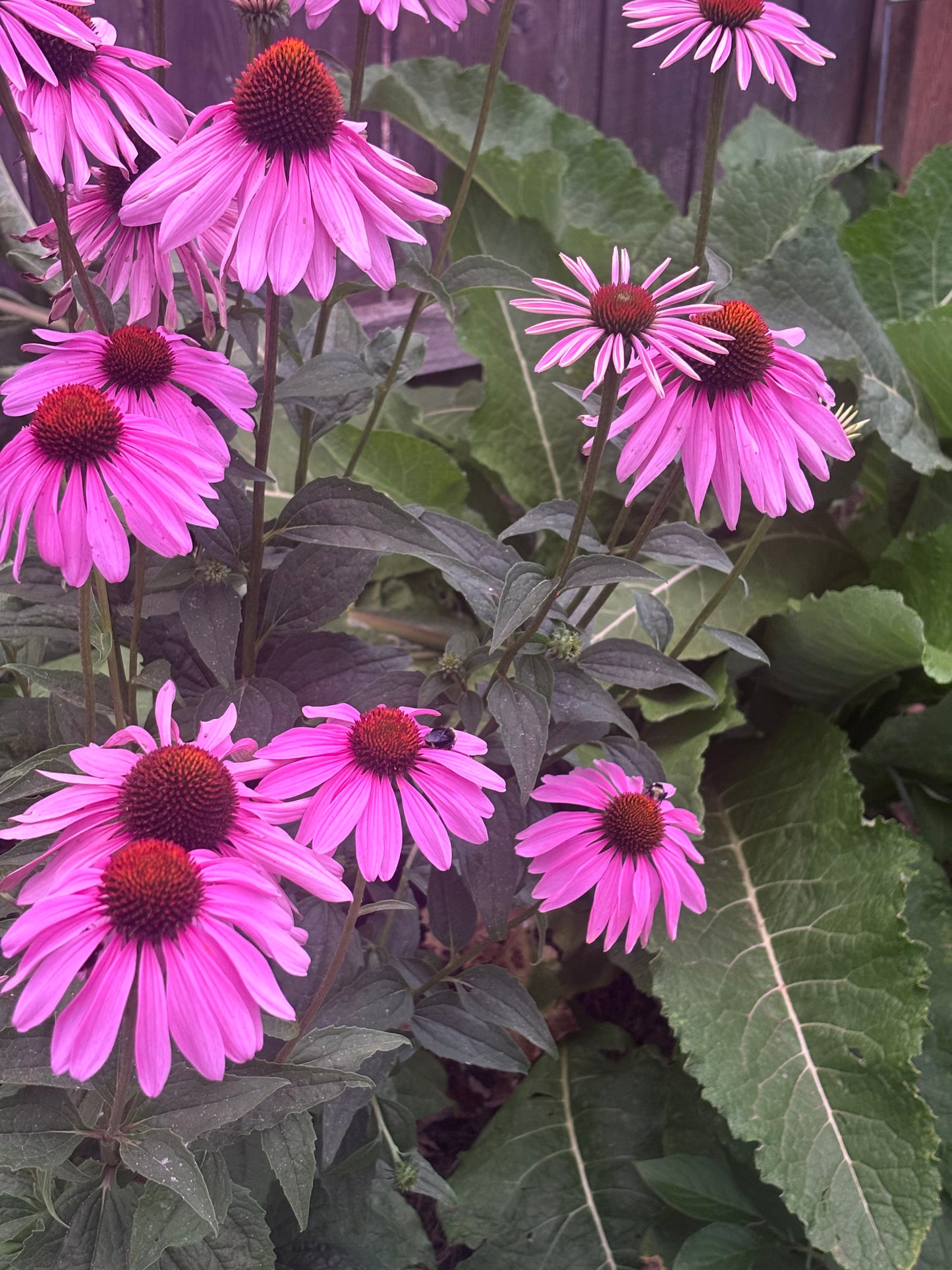
Purple Coneflower (Echinacea Purpurea) is easily one of my favorite medicinal and ornamental herbs in the garden because it's perennial, blooms all summer long, attracts pollinators, and has amazing immune-boosting benefits.
Purple Coneflower is known for its rosy-purple petals, coppery central cones and long season of color in the garden. Its flowers attract bees, butterflies, hummingbirds and other beneficial insects through the warm season, while the seed heads continue to offer structure and interest after bloom. Left standing, they also support birds and add winter texture to the garden.
A classic prairie & pollinator plant, it's valued for its toughness, beauty and ability to thrive in a wide range of conditions once established.
Favorite plant color combos:
-
- Echinacea Purpurea + Baltic Red Kale
- Echinacea Purpurea + Joy's Midnight Chard
- Echinacea Purpurea + Extrakta Sage
Echinacea purpurea is known for strengthening immunity and its anti-inflammatory properties. Indigenous people have used the roots and leaves of the plant for centuries. If you're interested in harvesting echinacea for making tinctures or tea, wait until the plant is dormant and in its second season to harvest.
Plants prefer average, well-draining soil and part to full sun (the more the better!). Avoid overly rich soil and constant watering - it does not like wet feet.
- Days to Maturity: 80 - 100
- Companion Plants: Bee Balm, Collards, Kale, Lavender, Sage, Tomatoes
- Open-Pollinated (OP), Heirloom, Perennial
- Plant Spacing: 18 - 24"
Photo Credit: Jess Page
Growing Guide
Growing Guide
Whether you're a new or seasoned gardener, it can be good to educate yourself about your new plant.
We highly recommend (& use ourselves) the Almanac's Growing Guides.
Share