

Basil, Cardinal
Basil, Cardinal
Couldn't load pickup availability
Cardinal Basil is easily one of my top 5 favorite plants to grow every year. It's stunning, unique, easy to grow, and honestly i could go on. I even got a cardinal basil tattoo last year, that's how much i love it LOL.
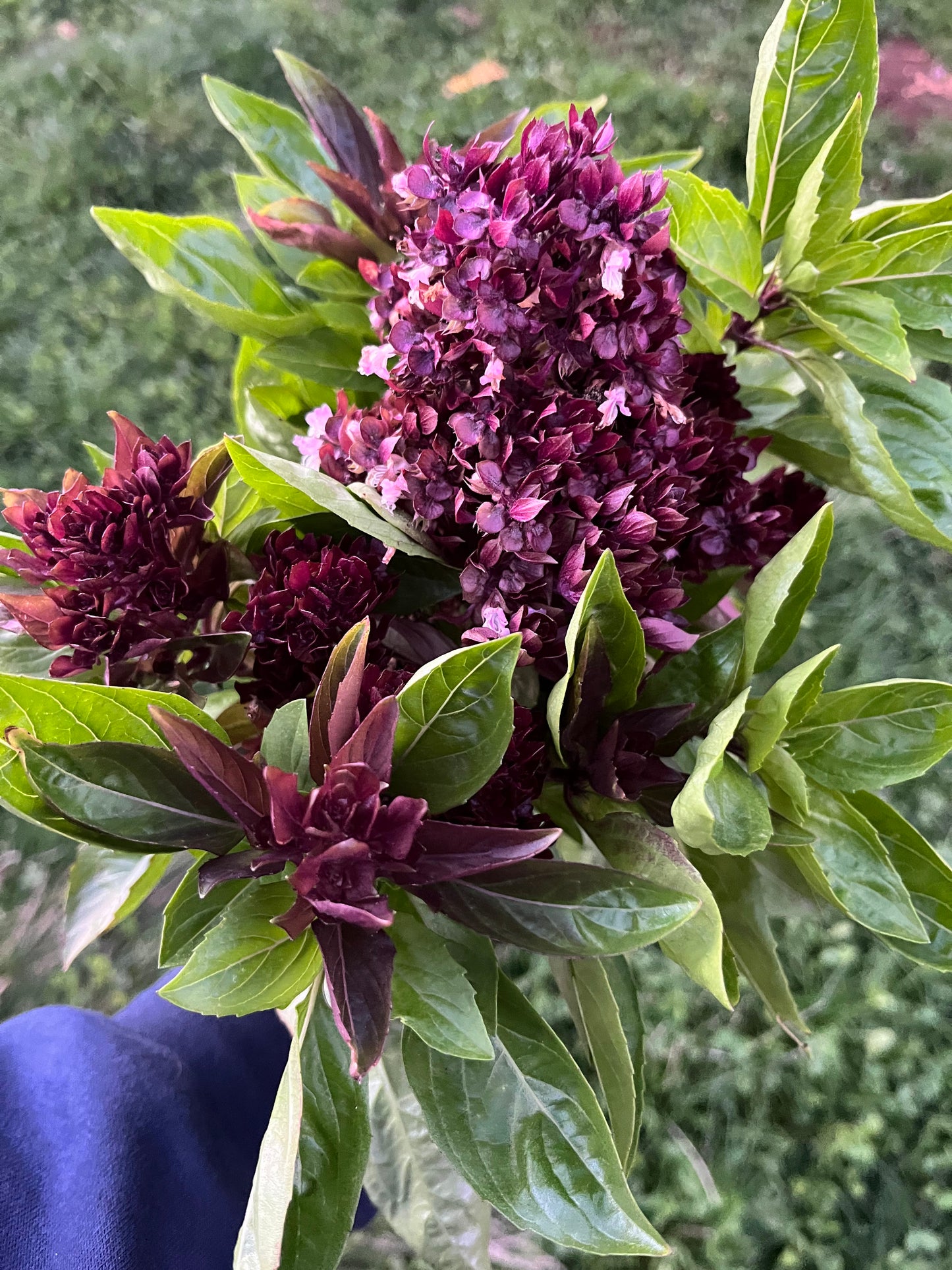
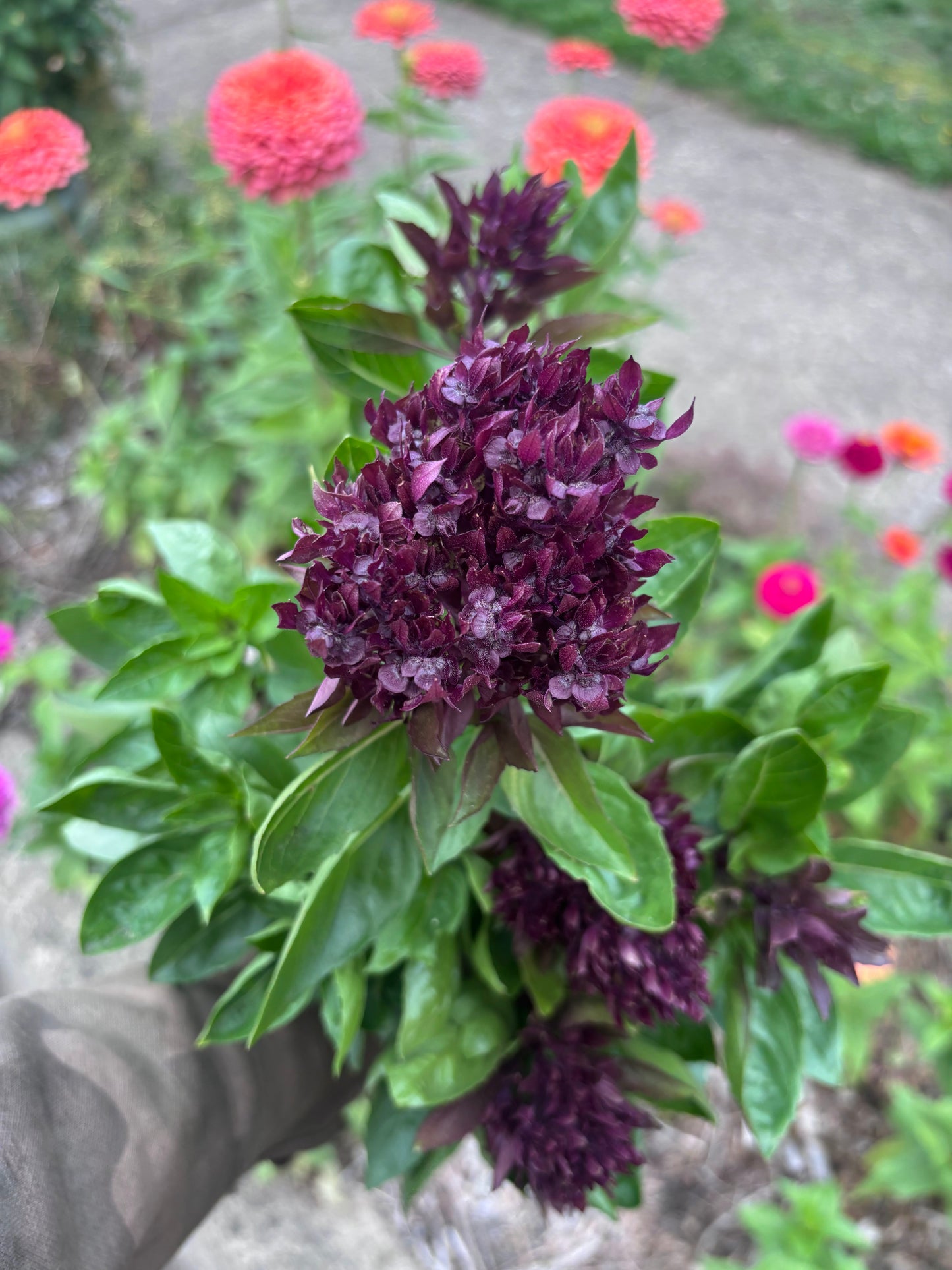
This basil variety is a late bloomer--she doesn't start transitioning to dark cardinal color until August. So when you purchase this start, she'll just look green. But give her time. It's 100% worth the wait!!
Flavor-wise, Cardinal Basil is a bit bolder than the average Genovese type, but honestly, you don't really notice it when you're eating it. Favorite recipes to use cardinal basil in: basil garlic compound butter, basil-infused simple syrup (hello fun cocktails + mocktails!) caprese, vinaigrettes.
Favorite plant color combos:
Cardinal Basil + Czech Black Jalapeno Pepper
Cardinal Basil + Joy's Midnight Chard
Cardinal Basil + Raspberry Burst Tomato
Cardinal Basil grows to about 24" tall, with narrow upright shoulders. The plant has deep burgundy-colored stems and thick, oval, bright-green leaves. When mature*, it produces tightly-packed, pagoda-shaped flower clusters at the crown of its stems that range in color from magenta to dark red. Basil thrives in full sun and fertile, well-draining soil. Mulching at the base of the plant helps to retain soil moisture & suppresses weeds. Container friendly.
- Days to Maturity: 70 - 85
- Companion Plants: Asters, Beans, Chives, Parsley, Peppers, Tomatoes
- Open-Pollinated
- Plant Spacing: 6 - 8"
Photo Credit: Jess Page
Growing Guide
Growing Guide
Whether you're a new or seasoned gardener, it can be good to educate yourself about your new plant.
We highly recommend (& use ourselves) the Almanac's Growing Guides.
Share